
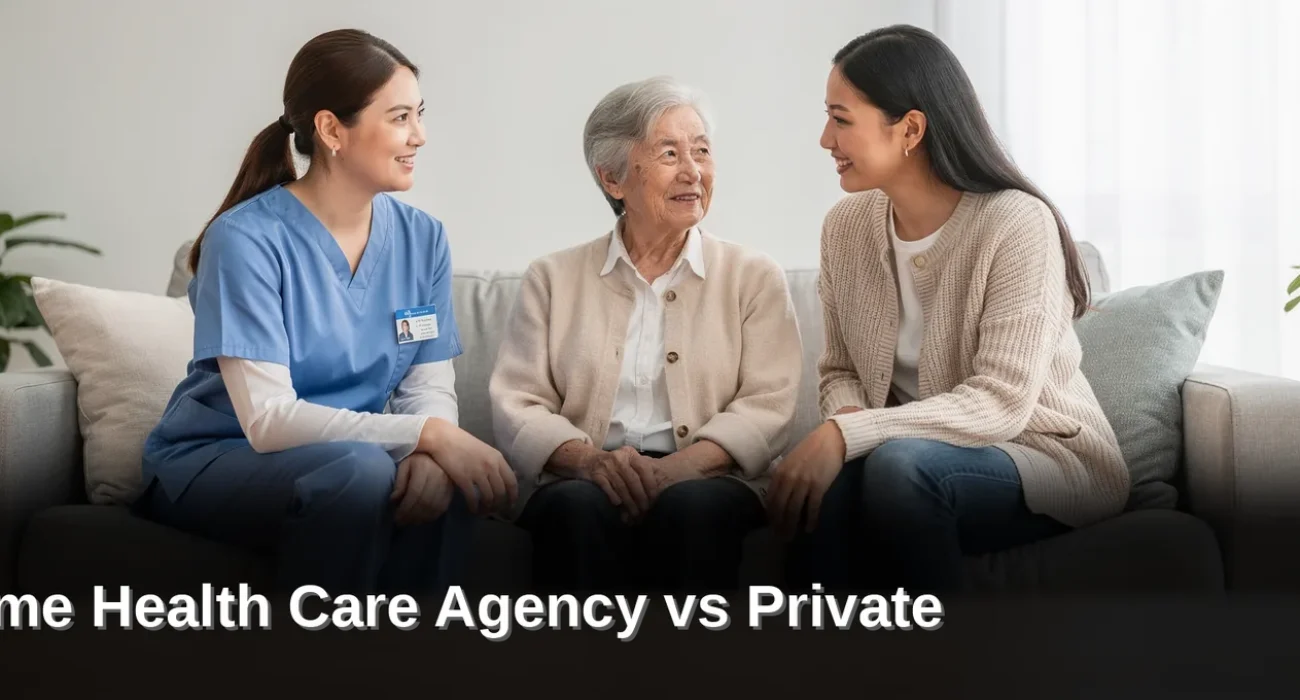
A home care agency like KB Healthcare Services employs, trains, and supervises all caregivers, handling scheduling and backup coverage. A private caregiver is hired directly by the family, making the family responsible for payroll, taxes, supervision, and finding replacements. KB Healthcare Services has provided trusted, non-medical in-home care in Northern Virginia since 2001.
What is a private caregiver?
A private caregiver is an individual hired directly by a family to provide in-home support. The family assumes full responsibility for recruiting, supervising, paying, and managing that caregiver.
This arrangement differs fundamentally from working with a home care agency. An agency employs its caregivers, handling all administrative and supervisory duties. A private caregiver, by contrast, operates as an independent worker. The family becomes the employer in every practical sense. They must find the caregiver, negotiate pay, manage the schedule, and arrange backup coverage if the caregiver calls out sick. The choice between these models often comes down to whether a family prefers lower costs and greater control or the convenience and support an agency provides, according to A Place for Mom.
Who can serve as a private caregiver?
Private caregivers come from several sources. A family member, a neighbor, or a friend referred by someone the family knows can fill this role. Independent professionals also work as private caregivers. These individuals may hold licenses or certifications, but the family still manages the employment relationship directly. The personal connection often appeals to families seeking a familiar face for their loved one. That familiarity, however, does not eliminate the family’s legal and logistical obligations as the employer.
What responsibilities does a family take on with a private caregiver?
The family carries the full weight of employment. Recruiting a qualified, trustworthy person is the first hurdle. The family must then supervise daily work, process payroll, and handle tax obligations. Managing a private caregiver also means solving problems alone. If the caregiver quits without notice or proves unreliable, the family scrambles to find a replacement. This burden of oversight is the central trade-off. Families gain direct control over who enters their loved one’s home and what tasks they perform. They also gain every administrative headache that a home health care agency would otherwise absorb. Understanding what in-home care includes helps families define the caregiver’s duties clearly from the start.
What is a home care agency?
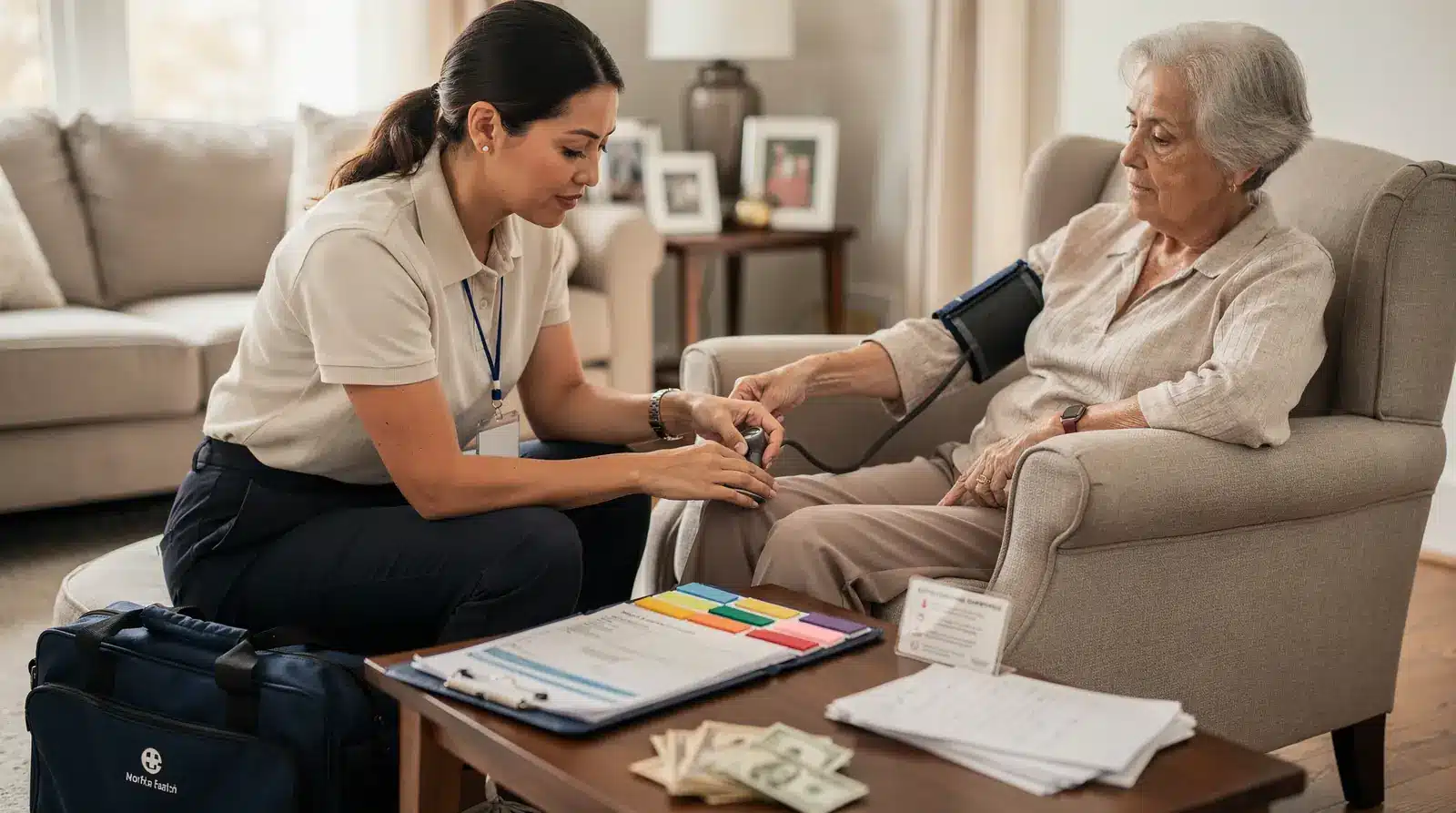
A home care agency employs and manages professional caregivers who deliver non-medical support to seniors in their own residences. The agency handles every employment detail, including scheduling, payroll, training, supervision, and providing replacement caregivers when a regular caregiver is unavailable.
Families gain a structured, reliable care arrangement without the administrative burden of becoming employers themselves. A Place for Mom notes that caregivers hired through an agency are agency employees, so the organization oversees all personnel management. This model eliminates gaps in coverage. It also removes the legal and financial risks families face when hiring private caregivers directly.
KB Healthcare Services exemplifies this professional approach. Founded in 2001, the company built its reputation on compassion and a commitment to treating every client like family. The team delivers personalized, one-on-one care that honors independence and promotes well-being for seniors across Northern Virginia.
How does an agency match caregivers to clients?
The matching process begins with a free in-home assessment. A care coordinator evaluates the senior’s needs, preferences, and daily routines. KB Healthcare Services then develops a personalized care plan and carefully selects a caregiver whose skills and temperament align with the client’s situation. This deliberate pairing fosters trust and consistency from the first visit.
What makes an agency different from hiring privately?
The distinction centers on accountability and continuity. A home health care agency assumes full responsibility for caregiver performance, background checks, and ongoing training. Private arrangements place those duties on the family. When a caregiver calls out sick, the agency deploys a trained replacement immediately. Private families scramble to fill the gap. KB Healthcare Services maintains this safety net for every client, ensuring uninterrupted support and peace of mind for family members who cannot be present around the clock.
The company’s nearly quarter-century track record reflects a philosophy rooted in dignity and genuine human connection. Families searching for a home care agency near me in Sterling, Ashburn, or Fairfax encounter a provider that prioritizes safety, emotional well-being, and the comfort of aging in place. Learn more about the company’s mission and values that have guided its service since day one.

What are the pros and cons of each?
The choice between a private caregiver and a home care agency hinges on a trade-off between control and convenience. Families gain lower costs and direct oversight with private hires, but they shoulder every administrative burden. An agency absorbs those responsibilities, delivering reliability and professional support at a higher price point.
Why might a family choose a private caregiver?
Private caregivers typically cost less and give families complete control over who enters the home. The family sets the schedule, defines the duties, and builds a direct relationship with the caregiver. That autonomy comes with significant weight. The family becomes the employer, responsible for recruiting, vetting, payroll, taxes, and supervision. The most acute risk surfaces when a caregiver calls out sick or quits without notice. Without a backup system, the family scrambles to fill the gap, and a single absence can cascade into missed medications, skipped meals, or a frantic search for last-minute coverage.
What makes an agency the more reliable option?
A home health care agency provides a structured safety net that private arrangements cannot replicate. The agency employs the caregivers, so it manages all hiring, background checks, training, and payroll. The defining advantage is backup coverage. When a regular caregiver is unavailable, the agency dispatches a qualified replacement, eliminating the panic that private employers face. This reliability reduces family stress and protects the senior from care interruptions. The trade-off is cost. Agency rates run higher because the fee covers administrative overhead, insurance, and that guaranteed continuity. Some families also report that quality can vary between assigned caregivers, though the agency remains accountable for resolving any concerns.
How does KB Healthcare Services address these trade-offs?
KB Healthcare Services operates as a trusted home care agency near me for families across Sterling and Northern Virginia. The company delivers the structural benefits of agency care, including screened, trained caregivers and dependable backup support, while preserving the personalized feel of a private arrangement. Its services span long-term in-home care, respite care, companion care, and specialized memory care, all designed to promote well-being and independence. A free initial assessment and a careful caregiver matching process ensure each senior receives one-on-one attention designed for their unique needs. Families avoid the employer burdens of hiring a private caregiver without sacrificing the warmth and consistency that make in-home care successful. For those still weighing misconceptions about professional care, KB Healthcare Services offers clarity on common home health care myths that often cloud the decision.
How do I choose the right option?
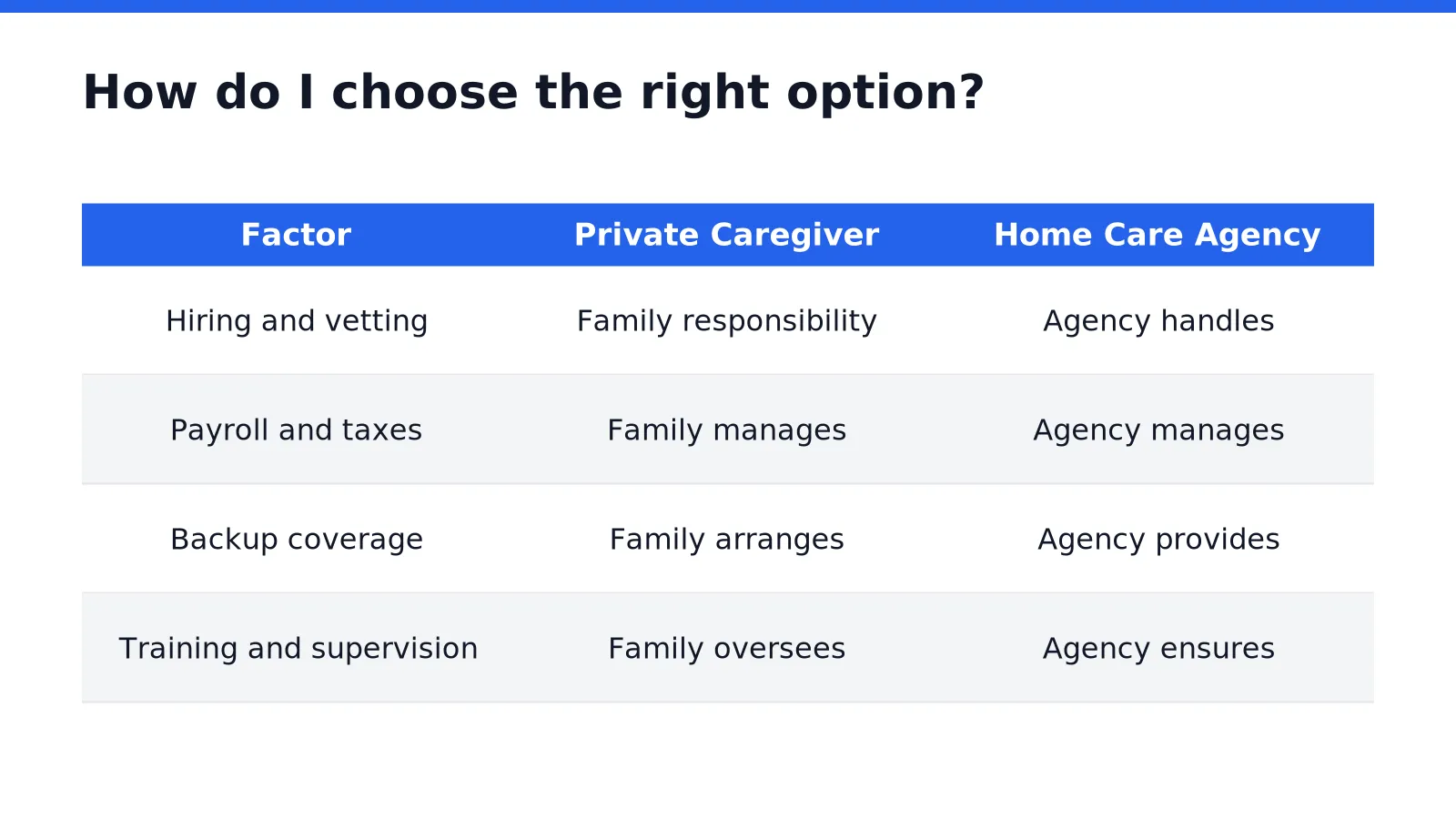
Families choose between a home care agency and a private caregiver by weighing oversight, reliability, and the level of involvement they can realistically manage. A licensed agency home health care provider handles vetting, training, scheduling, and backup coverage, which reduces the burden on family members. Private arrangements place those responsibilities directly on the family, requiring hands-on supervision of hiring, payroll, and daily logistics.
The decision hinges on practical capacity. Balancing these considerations with the level of involvement a family can manage ensures a choice rooted in both practicality and compassion. Families with limited time for supervision benefit from an agency’s structured support system.
What does a licensed home care agency actually handle?
A licensed home health care agency provides rigorous vetting, training, and continuity of care. This offers greater peace of mind for families who cannot oversee every detail themselves. The agency manages scheduling conflicts, caregiver absences, and performance issues without family intervention.
How do I find a home care agency near me in Northern Virginia?
Families searching for a home care agency near me in Northern Virginia find KB Healthcare Services serving communities across Arlington, Ashburn, Fairfax, Loudoun County, and surrounding areas. The company provides compassionate in-home care in Sterling, allowing seniors to thrive safely and comfortably in their own homes. Its focus on personalized, one-on-one care honors independence and promotes well-being.
Private home care agencies differ from individual caregivers in one critical way: employment and management. A private caregiver hired directly by the family becomes the family’s responsibility for recruiting, supervising, paying, and managing. An agency-employed caregiver shifts those duties to the agency itself.
Families who value structured oversight and reliable backup coverage find the agency model aligns with long-term care needs. The choice ultimately reflects how much direct involvement a family can sustain without compromising the senior’s quality of care.
To learn more about how dementia home care in Ashburn: stages and how to add care, you can check out our blog here.
Conclusion
The choice between a private caregiver and a home care agency comes down to how much responsibility a family can shoulder. Private arrangements offer lower costs and direct control, but they leave families managing every absence and administrative task. An agency absorbs those burdens, delivering reliable backup coverage and professional oversight that protects a senior’s care from disruption. Families who value structured support and peace of mind find the agency model aligns with their long-term needs.